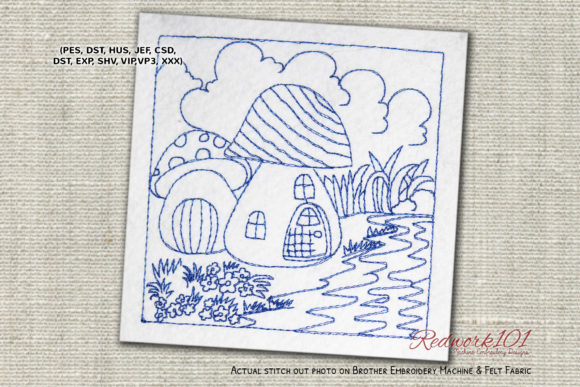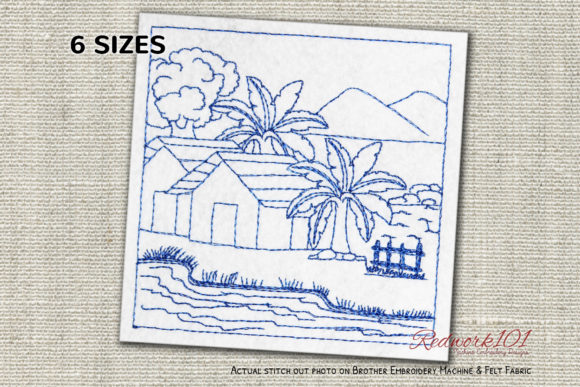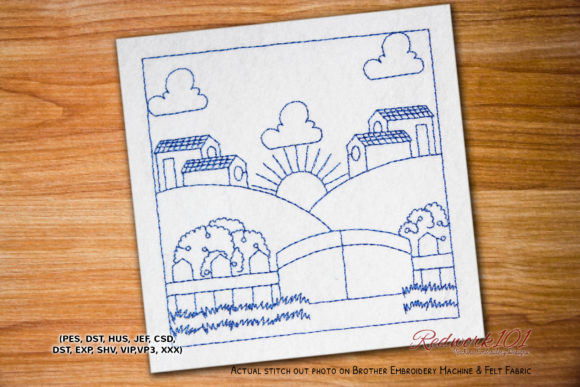
House Side of River
The "House Side of River" embroidery design offers a charming, scenic aesthetic that could work well for a variety of craft fair and handmade market products. With its simple yet evocative imagery, it has the potential to appeal to customers looking for rustic or nature-inspired items. However, as an experienced embroidery designer, I’ve evaluated this design with a critical eye to determine where it shines and where it may need refinement.
First Impressions: A Quietly Elegant Design
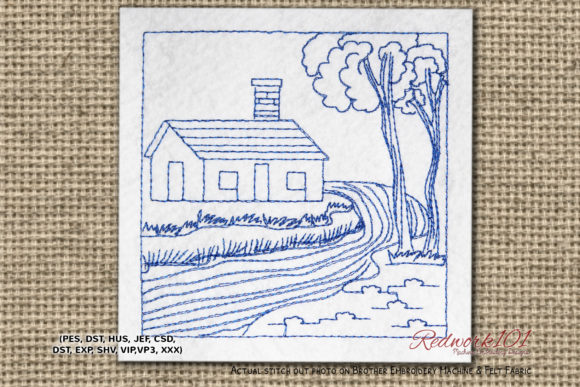
From the title alone, "House Side of River" suggests a peaceful, scenic scene. The description mentions that the Box Stitch shown in the picture is optional, and the outer box color can vary. This flexibility allows for customization, which is great for handmade product creators who want to offer unique variations. However, the overall design feels minimal—more decorative than bold or eye-catching. It leans toward a soft, farmhouse, or rustic vibe rather than something modern or high-contrast.
This makes it ideal for products that aim to evoke calmness or nostalgia, such as tea towels, pillow covers, or small fabric pouches. But it may not stand out as strongly on larger items like tote bags or caps unless paired with more dynamic elements.
Best Products for House Side of River
When considering where "House Side of River" would perform best, several items come to mind:
- Tote Bag Design: A medium-sized embroidery on a tote bag could work, especially if the design is centered and not too small. It might blend well with other patterns but may not be the standout piece at a craft fair.
- Apron Embroidery: On an apron, the design could serve as a subtle focal point, particularly if placed on the front pocket or back panel. It’s not overly complex, so it should be easy to produce in batches.
- Tea Towel Embroidery: This is one of the stronger applications. The design’s simplicity works well on a small, functional item, and it could add a decorative touch to kitchen textiles.
- Embroidered Patch: As a patch, "House Side of River" could be used on jackets, backpacks, or bags. Its size and detail are manageable, making it suitable for small shop product lines.
- Pillow Cover: A larger version of the design could work well on a pillow cover, especially if the background is left plain. It adds a cozy, handmade feel without being overwhelming.
It’s less effective on items like caps or market bags where the design needs to be more prominent or durable. For these, a bolder or more structured design would likely attract more attention.
Practical Selling and Production Considerations
As a machine embroidery design, "House Side of River" appears to be straightforward. It doesn’t have dense stitch areas or intricate details that could complicate production. However, there are a few practical considerations:
- Stitch Density: The design seems to have a moderate stitch count, which is good for batch production. It won’t require excessive time or thread, making it cost-effective for small shop product lines.
- Thread Colors: The outer box color varies in most designs, so choosing the right thread colors is important. Ensure that the selected colors contrast well with the background fabric, especially on dark materials.
- Hoop Size: Depending on the product size, you may need to adjust the hoop size. Smaller items like patches or tea towels will fit easily, while larger pieces like pillow covers may require a bigger hoop or multiple hooping sessions.
- Stabilizer Use: For textured fabrics like towels or thick cotton, using a good stabilizer is essential to prevent puckering or distortion.
Photographing this design for online listings like Etsy requires careful consideration. The image should be clear and show the design’s details, especially if it’s meant to be a focal point. A clean background and proper lighting will help highlight the embroidery’s quality.
Careful-Use Notes
There are a few areas where "House Side of River" may not perform as well:
- Dense Stitch Areas: If the design includes any densely stitched sections, they could cause fabric pilling or stiffness. Check the file to ensure it’s designed with appropriate spacing.
- Small Lettering or Details: If there are any text elements, make sure they’re large enough to be readable when embroidered. Tiny lettering may be lost on smaller products.
- Curved Cap Surfaces: This design may not translate well to curved surfaces like caps. Flat surfaces like tote bags or aprons are better suited for this style.
- Dark Fabric: On dark backgrounds, the design’s contrast may be reduced. Test the design on different fabric colors before finalizing your product line.
- Small Sizes: At smaller sizes, the design may lose clarity. Make sure it scales well for use on patches or small accessories.
Visual Appeal and Customer Engagement
"House Side of River" has a quiet charm that could resonate with customers who appreciate subtle, nature-inspired designs. It adds value to handmade products by offering a premium, custom feel. However, it may not be the first thing customers notice at a busy craft fair booth.
To maximize engagement, consider pairing it with other designs or using it as part of a cohesive theme. For example, a set of tea towels, aprons, and pillow covers featuring different scenes from the "Cities" category could create a strong visual display. This approach also supports brand consistency and helps draw in buyers looking for coordinated items.
Embroidery Designer Notes
Before turning "House Side of River" into finished products, here are some key steps to take:
- Test on Scrap Fabric: Always test the design on the actual fabric you plan to use. This helps identify any issues with stitch density, thread color, or fabric texture.
- Check Thread Contrast: Ensure that the thread colors you choose stand out against the fabric. This is especially important for dark or patterned materials.
- Review Spacing: Confirm that the design elements are spaced appropriately. Too much or too little space can affect how the design looks when stitched.
- Confirm Hoop Size: Choose the correct hoop size based on the product dimensions. This ensures smooth stitching and reduces the risk of errors.
- Inspect Stitch Density: Avoid areas with excessively dense stitches that could damage the fabric or cause discomfort.
- Use the Right Stabilizer: Different fabrics require different types of stabilizers. Use the appropriate one to maintain the design’s integrity.
- Create a Real Mockup: A physical mockup helps you see how the design looks in real life. This is crucial for assessing its appeal and usability.
- Compare Fabric Colors: If the design uses multiple colors, ensure they complement each other and the fabric.
- Confirm Commercial Licensing: Before selling finished products, verify that the digital embroidery file has the necessary commercial licensing rights.
By following these steps, you’ll be able to confidently turn "House Side of River" into a successful craft fair product or handmade item.